Bait-Station Version 1 (April 2026)
When building a Bait-Station, creativity has (almost) no limits. Anyone who enjoys tinkering can design their own setup – as long as the final result works reliably. Only the Python code running on the Raspberry Pi, especially the part responsible for uploading events, should not be modified, as this could affect the functionality of the website for all users.
To make getting started easier, I would like to present my bait station here as a reference design.
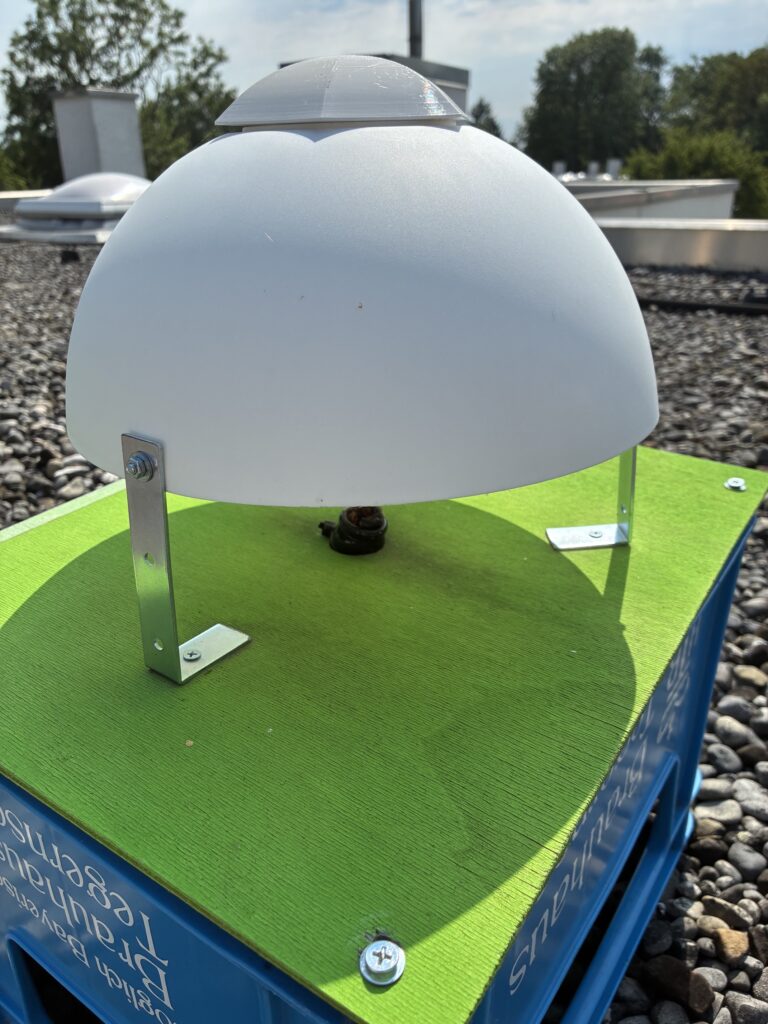
It consists of:
- A beverage crate (slightly elevated for increased stability)
- A wooden board, spray-painted green
(color tone: RAL 6018, used as a green-screen background and weather protection) - Three metal angle brackets used as spacers
- A white lampshade (rain protection and light diffusion)
- A 3D-printed lid
- A compass for alignment to true north
- A bottle containing the lure liquid with a piece of cloth acting as a wick, pushed upward from below through a hole in the wooden board and held in place by a rubber band.
Material costs: approx. €20
The following hardware components are used:
- Raspberry Pi 5 (4 GB RAM, 8 GB MicroSD card)
- Pi Camera Module 3
- USB-C power supply
- Custom-designed 3D-printed case with ventilation holes
Download STL Projectfile
Material costs: approx. €120
The camera should be positioned as centrally as possible above the bait liquid to achieve good 360° coverage. The more precisely this is done, the better the resulting measurements will be.
Finally, the entire housing is aligned to true north using a compass.
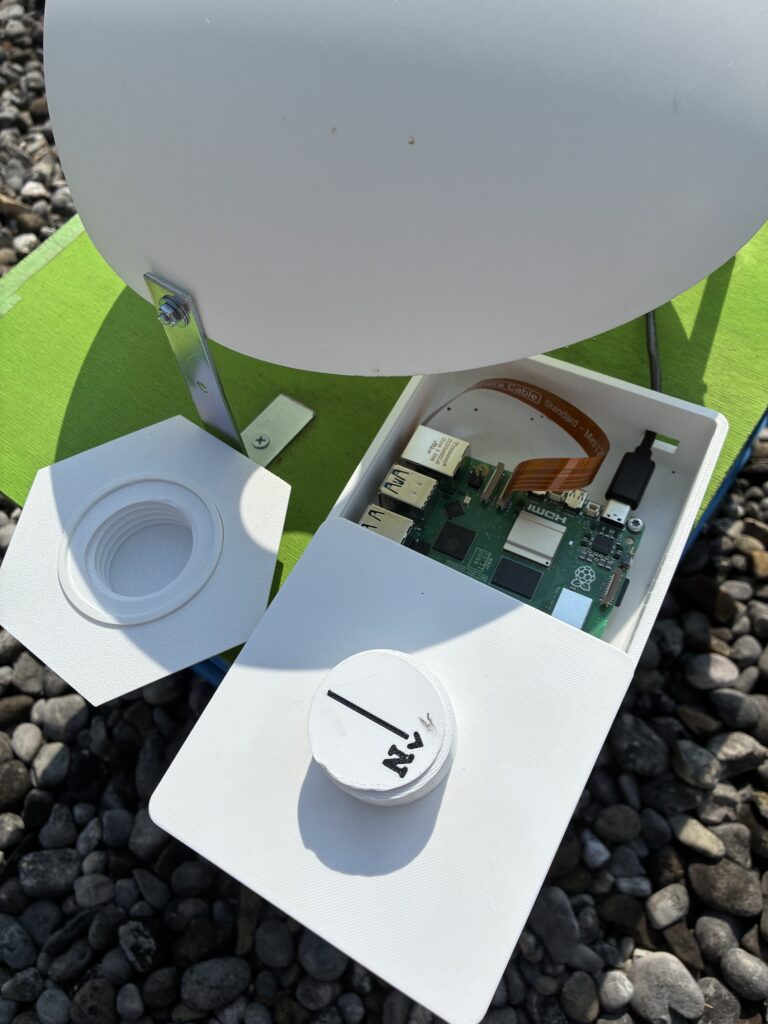
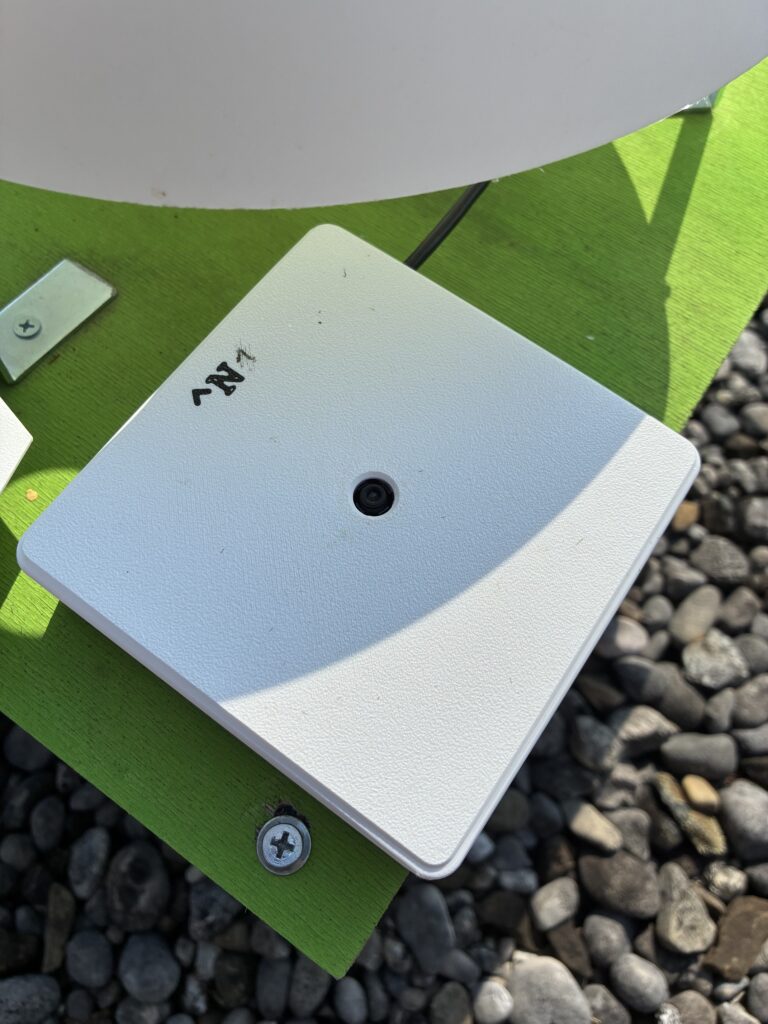
It is crucial to ensure that all power-related components are protected from rain and moisture while still allowing sufficient airflow to prevent overheating!
The external conditions are generally difficult to assess at this point in time. The lure liquid must not evaporate too quickly and must not become a trap for insects.
Raspberry Pi Setup
The Raspberry Pi is the core of the station. It detects motion, analyzes camera frames for hornets, and—upon a positive detection—uploads the event data to a database, where it is visualized on this website. For this, the station requires a stable Wi-Fi connection as well a power supply, which naturally limits the possible installation locations.
Installation instructions and detailed explanations can be found on the GitHub project page: https://github.com/KarstenMS/hornet-radar
Bait Liquid Recipe
- 0.5 liters of white wine
- 0.5 liters of dark beer
- 0.5 liters of fruit syrup or 0.5 kg of sugar
The bait liquid can be stored in the refrigerator for a long time and is not attractive to bees.